The Most Common Packaging Challenges We See Across Industries
When you work across different sectors, it becomes clear that packaging challenges often look different on the surface but come back to many of the same operational issues. Furniture and kitchens businesses may be dealing with bulky or fragile products, while retail operations often manage broad product ranges and high order volumes.
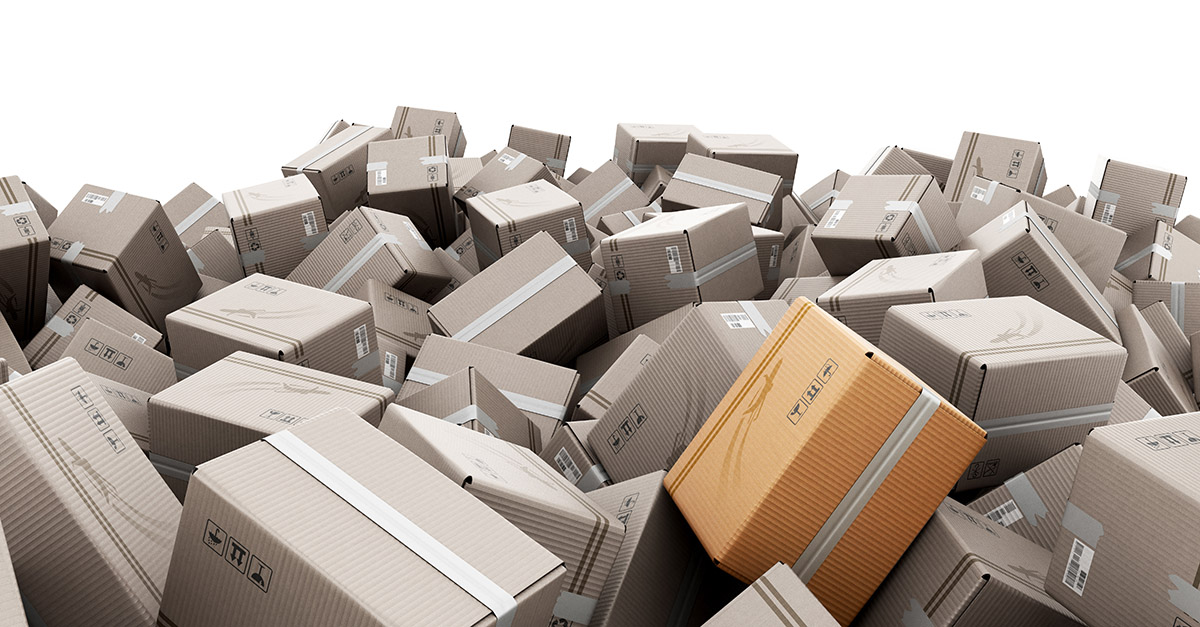
Although the products differ, many of the packaging challenges we see are surprisingly similar. Across large operations, the same issues tend to appear: variable product sizes, oversized boxes, rising freight costs, product movement in transit, warehouse space pressure and the admin that comes with managing packaging stock.
Why do variable product sizes create packaging challenges?
As product ranges grow, businesses need to handle more shapes and sizes through the same setup. A fixed set of boxes may have worked well at one stage, but it can become harder to manage when the product mix becomes broader.
In our experience, many large businesses have already tried adding more box types to solve this. That can help in some cases, but it is not always the best option if the business is planning for further growth. More box types can create more stock to store, order and monitor, while packing teams may still need to choose the closest fit rather than the right fit. This is where extra void fill, slower packing and less predictable processes can begin to appear.
How does shipping air increase cost and inefficiency?
Oversized packaging means businesses are often paying to move empty space. A box that is larger than needed can affect pallet loading and freight cost, especially where carriers assess shipments by volume as well as weight.
In a high-volume retail operation, small inefficiencies can become significant when repeated across thousands of parcels. In furniture or manufacturing, where products may already take up more space, poor box fit can make transport planning even harder. From our perspective, reducing unnecessary empty space is one of the clearest ways businesses can make better use of every shipment.
Why does transit damage remain a packaging concern?
Packaging is not the only cause of product damage, but poor fit can contribute to movement during transit. If a product has too much space around it, it may shift even when filler is used. That can create pressure points or damaged edges.
This matters across sectors, but particularly where products are heavy or presentation sensitive. Kitchens and bathrooms products need reliable protection. Print and POS items often need to arrive ready to use or display.
How does packaging stock affect warehouse space and admin?
Holding a wide range of box types can take up more space than businesses realise. It also adds ordering and forecasting work. Over time, packaging stock can become another inventory stream that needs regular attention.
This creates hidden admin for procurement, warehouse and operations teams. It also takes up space that could otherwise support core product activity. For many large businesses, we see packaging complexity become a bigger operational issue than expected, especially when box types have been added gradually to solve individual problems rather than reviewed as part of the wider process.
How are businesses reducing packaging complexity?
The businesses getting better results are often the ones reducing complexity, not adding to it. Right Size packaging creates boxes that fit products more closely, helping to reduce empty space and the need for excess filler. Fanfold corrugated board supports on demand box production from a flexible stock format, rather than relying only on stored pre made boxes.
Ribble Packaging works with large organisations across a range of sectors to review packaging performance and identify where Right Size packaging, fanfold and automation can support a more controlled approach.