What is Reverse Logistics Management?

In today’s world, the logistical support goes beyond the typical forward logistics and includes product recall, product disposal, and product recycling too. All the remanufacturing and refurbishing activities can be incorporated in the definition of reverse logistics.

Reverse logistics management covers the procedures which are associated with the return, maintenance, repair, dismantling and even recycling of products and their materials. It includes the reversal of the running products through the supply chain so that maximum value can be attained.

In 1992, James R. Stock for the very first time used the term reverse logistics in a white paper titled with the same name. It was in 1998 when the concept was further explained and refined by him in the book “Development and Implementation of Reverse Logistics Programs”.

Since then, reverse logistics management has not only been considered an attractive process for businesses to follow but a necessity. Especially as sectors such as online retail grows and the fact that customers are now budget-conscious and will return products they aren’t happy with.

Usually, logistics deals with the events which bring the product to the customers whereas, in reverse logistics, the resource or the product need to go back at least one step to reach the client. It is important to note that even if the product has to go back only one step, there can be many processes involved to make that happen.

Processes of Reverse Logistics Management

There are numerous aftermarket processes through which a product goes in reverse logistics. These include:

Remanufacturing

The product is rebuilt by using parts which are either repaired, reused, or can be new too. This is done to provide an enhanced life to the product.

Refurbishment

The resale of a product which has been repaired and is now in a condition as good as new comes under refurbishment.

Servicing

This is a comprehensive category and includes field service, customer service, and issuance of return merchandise authorisation for product returns in it.

Return Management

When the products are returned because of any issue or defect, they are taken care of through this process.

Recycling and Waste Management

When a product reaches its life or becomes defected due to any reason then instead of just disposing of it, the materials can be utilised for the development of another product.

Warranty Warehouse

When the products in warranty are returned due to any minor or major defect, the warranty is managed through reverse logistics. The flaw is fixed, and the product is returned to the customer, or in some severe cases, replaced with a new product.

Warehouse Management

The management of the warehouse where all the remanufacturing and repairing takes place is also carried out under reverse logistics management. As seamless reverse logistics management process will also create a well-organised and ordered warehouse, which works seamlessly to offer goods out, goods in and goods under review, repair, re-testing and repackaging.

Importance of Reverse Logistics

The most important question here is why is it important for retailers to deal with reverse logistics? This is because this helps them in improving their customer service and provide better response times to them. The manufacturers are able to reduce their environmental impact and bring a positive change to the overall corporate environment.

In a system where logistics is used, it is vital that reverse logistics is incorporated into the planning and process creation, as without reverse logistics, you can’t have an effective, operational logistics program.

Here are the benefits which organisations can reap through reverse logistics management:

Profitable and Efficient Business

Through better planning, effective management, and skilled execution, the process of reverse logistics tends to become profitable for the businesses. Because of generous return policies, the retailers might order a greater stock, and in the same way, customers will be buying more products too. This is because retailers know that the company will help them if there is something wrong with the product or if they are not comfortable using it.

Good Image for the Customers

If a company is ready to offer return and exchange policy, then this means that they care about their clients and are willing to take responsibility for any kind of fault. This shows that their ultimate goal is the satisfaction of the customers instead of making huge profits. A caring reverse logistics strategy can make the customers choose a particular company out of the entire lot and in turn, this benefits the retailers too with higher sales.

Proper Disposal of Products

Through reverse logistics, the companies follow proper disposal of goods which keeps them in line with the environmental compliances. This not only helps them in reducing their footprint on the planet but creates their philanthropist image in front of the customers too. Moreover, the materials and products can be reutilized which are in a perfectly fine and resellable condition.

Strategies for Success

As customers are becoming extremely sophisticated in their purchasing decisions with the environmental laws taking a forefront too, the companies are looking to redefine their return and exchange policies. The goal is to increase value amongst the customers and to build strong loyalty.

Some of the most effective strategies for reverse logistics which are being used by leading multinationals including Hewlett-Packard, Eastman Kodak are:

  • Reducing the amount of waste in the environment which also leads to lower operating costs and compliance with the laws.
  • Recovering the costs which are associated with collecting raw materials, manufacturing, packaging, and waste disposal.
  • Realising the importance of user-friendliness for any product and investing in the user manuals to make them easily comprehensible.
  • Retailers, vendors, and logistics companies working together to control the number of returned products.
  • Conducting spot audits helps in reducing discrepancies and thus, controls the number of claims made.

[vc_cta h2=”Resell at full value returning immediate profits” h2_font_container=”font_size:20px|color:%23000000|line_height:24px” h2_use_theme_fonts=”yes” shape=”square” style=”flat” add_button=”right” btn_title=”CALCULATE YOUR SAVINGS NOW” btn_style=”flat” btn_color=”theme_style_2″ btn_align=”right” btn_i_align=”right” btn_i_icon_fontawesome=”fa fa-chevron-right” btn_add_icon=”true” btn_button_block=”true” el_class=”third_bg_color” css=”.vc_custom_1495115428452{padding-top: 30px !important;padding-right: 30px !important;padding-bottom: 30px !important;padding-left: 30px !important;}” use_custom_fonts_h2=”true” btn_link=”url:http%3A%2F%2Fribble-pack.co.uk%2Frestore-revenue||”][/vc_cta]

Challenges of Reverse Logistics Management

Reverse logistics comes with its own share of problems which can be overcome when the entire team of vendors, retailers, and logistics companies come together to face them.

Difference in Pricing

Depending on the type of product, the prices might fluctuate speedily so it is imperative that the merchandise which is put into the return mode must be handled expeditiously. The returns should be processed rapidly by the retailers and the vendors before it becomes too expensive for them.

Performing All the Retailing Tasks Again

The entire responsibility of shortening the time relies on many processes and often many providers in the steps between return origination up until the reselling of the product.  They are involved in collecting, scanning, invoicing, and dispositioning of the products and need to make sure that the return is done within the given time while ensuring the ultimate satisfaction of the customers.

With this in mind, it is vital that the entire reverse logistics management is well thought out and implemented. With so much at stake, from customer satisfaction to the bottom line your reverse logistics management needs to be robust and comprehensive managing all risks and possible scenarios.

In many cases, leaving your entire reverse logistics management to one provider often allows businesses to have a more manageable trail, ensuring that there will not be a breakdown in the chain of processes. It can also help to make sure that the act of completing the same transactions again from the start can be met with ease rather than complications.  

Stay Competitive

There is immense competition in the retail industry and to stay ahead in it, the retailers rely on their return policies as a competitive weapon. In the modern times, these retailers have become more powerful than the manufacturers, and if any manufacturer doesn’t offer a return policy, the chances are high that the retailer will not take their product.

It is the same for consumers who have the power and command over the retailer, without a returns policy, customers will choose your competitor who offers a better service.

All in all, staying competitive means making reverse logistics management as important as forwarding logistics management.

The Importance of Returns Management

Returns management, often referred to as reverse logistics is the management of returned items to your company. But do you know the importance of returns management?

We talk through some of the benefits.

How you manage returns will influence the overall management of your warehousing and storage, inventory, depreciating goods and soiled items. Therefore, the bottom line will be the impact on overall profitability.

Managing returns is never quite as simple as putting items back on a shelf to be shipped off to another customer. Returns involve a quality control process. The reason for returning an item should be established as soon as possible once it has been returned, if not beforehand. Streamlining a process by which returns are then managed will prevent hindrance to outgoing logistics too.

Processing can become expensive if it isn’t efficient.

Absorbing the cost

When products are handled by a large third party company such as Amazon, once the condition of the return has been established it can either be repackaged ready for resale, sent for refurbishment or, alternatively, for recycling. Even when products can no longer be sold, it is still possible to mitigate costs against refurbishment or recycling, and this can neutralise the expense of the process involved.

It is also important to remember that once an item has been returned, it will either be refunded or replaced without an additional sale. Managing the reverse logistics efficiently will prevent these cases from becoming a severe loss to the company from within the overall logistics management process.

The cost of returned products will have an impact on pricing. If many of the same products are being returned then to keep the product profitable its price will inevitably go up.

This domino effect can be reduced by an effective system that reduces the cost of returning the product, while also providing insight into the reasons behind the return. There are instances too, where the cost of the return is not worth the value of the product even at scrap value. In these cases, it may be a better solution to simply credit or refund the customer and ask the customer to dispose of the item locally.

Customer relationships

The efficiency and adequate management of returns have a substantial influence on customer relationship management. This will in turn influence long term returning customers, additional sales and future business development. When the returns management is prioritised, it leads to greater profitability within the company. It leads to increased customer satisfaction too and therefore reduces waste.

Every return is an indicator of failure that has taken place with the client relationship.

Items may be returned for many different reasons. It could be that the product wasn’t exactly what the customer wanted, it arrived damaged, or that there was an issue with timeous delivery. When the returns process adds to that experience in a negative way, not only will the customer be reluctant to do business with you again, but they’ll discourage others from doing so too.

[vc_cta h2=”Resell at full value returning immediate profits” h2_font_container=”font_size:20px|color:%23000000|line_height:24px” h2_use_theme_fonts=”yes” shape=”square” style=”flat” add_button=”right” btn_title=”CALCULATE YOUR SAVINGS NOW” btn_style=”flat” btn_color=”theme_style_2″ btn_align=”right” btn_i_align=”right” btn_i_icon_fontawesome=”fa fa-chevron-right” btn_add_icon=”true” btn_button_block=”true” el_class=”third_bg_color” css=”.vc_custom_1495115428452{padding-top: 30px !important;padding-right: 30px !important;padding-bottom: 30px !important;padding-left: 30px !important;}” use_custom_fonts_h2=”true” btn_link=”url:http%3A%2F%2Fribble-pack.co.uk%2Frestore-revenue||”][/vc_cta]

Recycling

Effective product returns management can have a positive environmental impact too.

There are many ways that non-sellable returned items can be recycled or reused. Some that are refurbished create a greater balance in the profitability offset, helping the organisation to reduce any real costs to the process.

Everyone is involved in returns management

Everyone participates in the returns process, not just the staff at inbound receiving. Sales staff need to recognise why items are returned and can be proactive in reducing the number of returned goods. Sometimes the item won’t meet the needs of the customer or the client needs to be better educated in how to use the item.

Quite often goods are returned, and no fault can be found with the item. When this happens frequently, it can indicate that the customer doesn’t know how to use the product correctly and the item or its packaging may require some re-engineering. When marketing staff are invested in the returns process, they will have an interest in keeping the sales profitable. This will, in turn, enhance reduction in returns.

Staff in finance will have to apply a credit or a refund, and this requires a seamless system from the moment the return is despatched back to the warehouse or supplier. The supply chain is as it implies reversed and this needs to be as robust as the outgoing logistics system.

Returning products to the sales inventory

When products have been inspected and found to be in a saleable condition, they can be quickly repackaged and replaced in a merchandising position that enables the supplier to resell it and thus reduce the handling time and consequently the cost. An inspection and repackaging solution offered by returns management companies can also help to lower the cost in returns of no fault items. This reduces the reverse logistics cost to the company even further.


Get your products back to market sooner with returns management

If you want to streamline your returns process so that you regain the profits from your returns, then speak to Ribble about their Ribble Right Size solutions.

With Ribble Right Size can help you recover the costs, repack your items and resell almost immediately.

Three Benefits Of Reverse Logistics

Regardless of the service, returns for any business are a pain and an inconvenience. Unfortunately, in every retail sector returning goods is inevitable; whether it is an unwanted gift, broken product or a garment that doesn’t fit.

It is estimated that returns cost UK retailers £60bn a year, £20bn of which is generated by items bought over the internet. This number continues to rise as online sales increase, making returns inevitable. Customers can’t always accurately judge the product from a picture on a screen, they may confuse the size and shape of the product, or perhaps to colour isn’t quite what they’d envisaged. Retailers need not dismay with the increase of returns, with every problem comes an opportunity.

With reverse logistics, returns no longer have to be a bane of the industry. Actively managing this process will help to reap resales, increase product life cycle and generally improve the bottom line. What many retailers don’t know is that there are many more advantages to a slick reverse logistics set up. Here are the three lesser known benefits that retailers can make use from which can improve not only the business strategy but increase the value to improve the bottom line and showcase your business as a creative and innovative brand that maximises profits, increases sales and retains customers.

Three Lesser Known Benefits Of Reverse Logistics

1. Customer Feedback And Insight

With every product returned, you get the chance to find out why and draw conclusions from every single return.

If a particular product is continually being returned due to a specific fault, you have the opportunity to use the knowledge to improve future versions of the product or to break ties with a particular manufacturer. By managing the customer information from reverse logistics, you will quickly identify trends with products and use this insight to come up with a more durable solution, which won’t result in returns.

Alternatively, a selection of goods may be returned due to poor sizing, especially in the fashion sector. With these returns, retailers may be able to analyse a trend and may be able to adjust their sizing recommendations on their websites. Even if you cannot change the labels, offering a well-tuned sizing guide on your site may reduce the number of returns you receive.

2. Repeat Business

Returns are becoming the norm in the commercial market. In the past, consumers may have felt ashamed or embarrassed about returning an item this attitude has changed. Shoppers are more budget-conscious are returns are vital if they are not happy.

Having a smooth and seamless reverse logistics setup does not only make the job of your employees easier, but it also gives a great customer impression. Businesses who make returns easy are far more likely to receive high praise from customers and win repeat business.

In a world where consumer ease is priority, a seamless and easy reverse logistics programme that best serves the needs of clients is essential in ensuring business and maintaining excellent client relations.

3. Happy Workforce

Returns, when not actioned, take up valuable space in the warehouse. Without a final goal or destination for returned products they become mismanaged clutter, that takes up valuable space and time. Warehouses need to be swift and ever-moving a zone of stationary clutter will have a detrimental effect on warehouse workers. It is an eyesore, and it detracts from the excellent job they do managing stock and ensuring a smooth, swift process.

Make your workforce happier by actively managing the returns; it will give them an extra zone of control and a place where they feel their work is showcased to the best of their ability. By actively managing returns you free up valuable space to receive new stock and to keep the warehouse orderly and manageable. With reverse logistics, there is no longer a dark and dusty corner that feels neglected.

Let Us Help

At Ribble, we know there are so many benefits of a reverse logistics programme. We want your company to profit from returns and see the positives rather than feel a burden. Our Ribble Right Size solution allows you to maximise your profits through returned goods by restoring products into new, pristine packaging that means you can then re-sell products at their full value.

The Importance of Reverse Logistics

Realise the Importance of Reverse Logistics and Save Money

Reverse logistics or reverse supply chain management is nothing new, in fact, it has always been considered a necessary evil for product returns and recalls. Reverse logistics has been synonymous with extra costs and liability, as a process that brings expense rather than profit. However, in recent years there has been a shift in mentality regarding the importance of reverse logistics and reversing supply chains, and businesses are now discovering that ordinary wasteful occurrences are now an opportunity for profit.

Reverse logistics covers a multitude of processes in the aftermarket sector, from refurbishment, replacement, remanufacturing and scrapping. It is a key system needed to manage the end of life process for your business, allowing you to clear the supply chain path by removing existing products to make way for new season/new era products.

Why The Importance Of Reverse Logistics Is Undervalued

Reverse logistics is commonly known as the ‘Green Strategy’ as it lessens the environmental impact through reducing waste and recycling. There is a substantial profit to be made from reusing parts, but as the costs are not visible and clearly defined, organisations will ignore them.

Without a clear-cut solution, it is very easy for organisations to avoid reverse logistics problems and indeed, the reverse supply chain can be difficult to manage. Forecasting and estimating are essential for any business investment, but while it’s possible to record and plan for returns, it is impossible to reach exact numbers.

To counteract the unforeseeable returns, there is an opportunity for businesses to focus on the end of life strategies for their products, which therefore justifies the expense of faulty and unexpected returns. With an end of life plan in place, it is possible for businesses to predict the total volume of sales and therefore measure the savings and return on investment for reverse logistic programs.

How Reverse Logistics Can Save You Money

Asset Recovery and Avoiding Fines

By having a reverse logistics process for product returns, you can recapture the value of the product or ensure correct disposal, both of which will affect your bottom line. Running products through the supply chain in reverse will ensure maximum value from your product, whether it is through resale, repairs, or using the parts in another product. It is an excellent asset recovery system, and if the product has no value left, then at least, you can ensure a disposal that will avoid hefty fines from the authorities for incorrect disposal.

Second Return on Investment

The more value that you can extract from returned goods, the better. Instead of wasting time, costs and resources on raw materials, you can focus on a greener and cheaper solution. Through reusing or, at least, extending the life of a product through repair gives you a second return from one sale. For example, in the furniture market, customers will look for re-upholstery and repairs to extend the life of the investment, if not, second-hand and refurbished sales will give profits a boost.

Customer Satisfaction and Incentivisation

While not strictly saving money, improving customer satisfaction will improve your profits through business growth and increased sales. By having a liberal and easy returns policy, you will boost the trust and satisfaction of your customers. By taking faulty products seriously and offering repairs and replacements, you will see a significant increase in customer satisfaction through your proactivity and care.

Your returns policy will help to secure a strong customer base through trust and your commitment to ensuring good quality. With a returns policy that showcases how ‘green’ your business is, you incentivise customers to buy your products, giving increased consumer confidence and a base of new customers.

Three Ways To Profit After Realising The Importance of Reverse Logistics

1. Offer a trade-in program for new season products.
2. Increase your warranty and protection sales.
3. Mark down and sell damaged goods cheaper through other website but maintain a full charge for delivery.

How To Avoid Losses Through Reverse Logistics

To make sure your product retains the maximum value possible, you need to ensure that the returns system is robust and seamless. Careful handling and transportation are essential to keep the maximum value of your products and reduce the risk of damage or further damage. If your product is in unharmed with pristine new packaging, you can make sure your product can return to the shelf quickly.

Ribble Restore is an innovative packaging solution that enables returned goods  to be repacked in a bespoke perfectly size box allowing retailers to regain the maximum value possible from returned items.

It is predicted that returns cost retailers £20 billion every single year, to ensure your business capitalises on reverse logistics, saves money and even profits from them, bespoke, protective packaging and timely returns are essential.

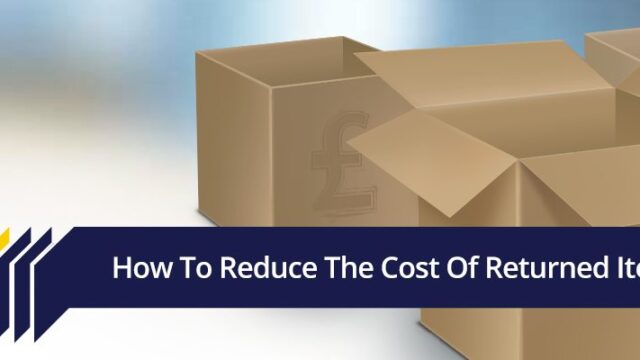
How to reduce the cost of returned items

Is your business struggling with the cost of returned items? Many UK businesses are losing money through customers returning items, because of delivery, postage and being unable to resell the product at its full value.

If you’d like to reduce the cost of returned items, then Ribble Packaging can help! Ribble Right Size is an innovative and unique packaging solution that can help reduce the cost of returned items to your business.

The Right Size solution for returns

Following the Christmas period, retailers are likely to be inundated with returns due to people sending back unwanted gifts they’ve been given. As the number of people shopping online continues to increase, so does the total number of items that are returned.

Returned items often need repackaging or cannot be sold again at full price, meaning your business is losing money. Ribble Right Size can help to reduce the cost of returned items within your business.

The solution allows retailers to restore returned products into retail packaging, so that the product can be sold again at its full value and make the biggest profit possible on the product.

Ribble Packaging can work closely with your business to provide a Right Size solution that suits your particular needs.

Contact us at Ribble Packaging

If you are interested in Ribble Right Size, or any of our other cardboard packaging services, and would like to see how Ribble Packaging can save you money, please get in touch. Contact us online and a member of the Ribble Packaging team will get back to you as soon as possible. Alternatively, call us directly on 0161 622 2302.

Copyright © Ribble Packaging Ltd.
Designed by Definition Consulting